Day 17: Memories
I got myself all worked up yesterday. I need to vent. Then I can continue my day. Yesterday I was at a farm stand getting some flowers. I got into a conversation with a woman about knitting. I am not sure how it came up (maybe because I was dressed in hand knits or I have a bumper sticker with alpacas). Knitting tends to come up often. Oh or maybe because in the passenger seat I always have a little knit to work on and my camera. So anyway back to my venting. The woman told me she used to have a yarn store many years ago. She told me she had to close it because knitting isn't popular anymore. I told her I thought it was quite popular today. I told her I was so happy to see yarn stores returning to the area.
She told me she remembers when knitting was so popular and I'd never know how popular it was I am too young. She asked when I started knitting and I told her when I was younger.
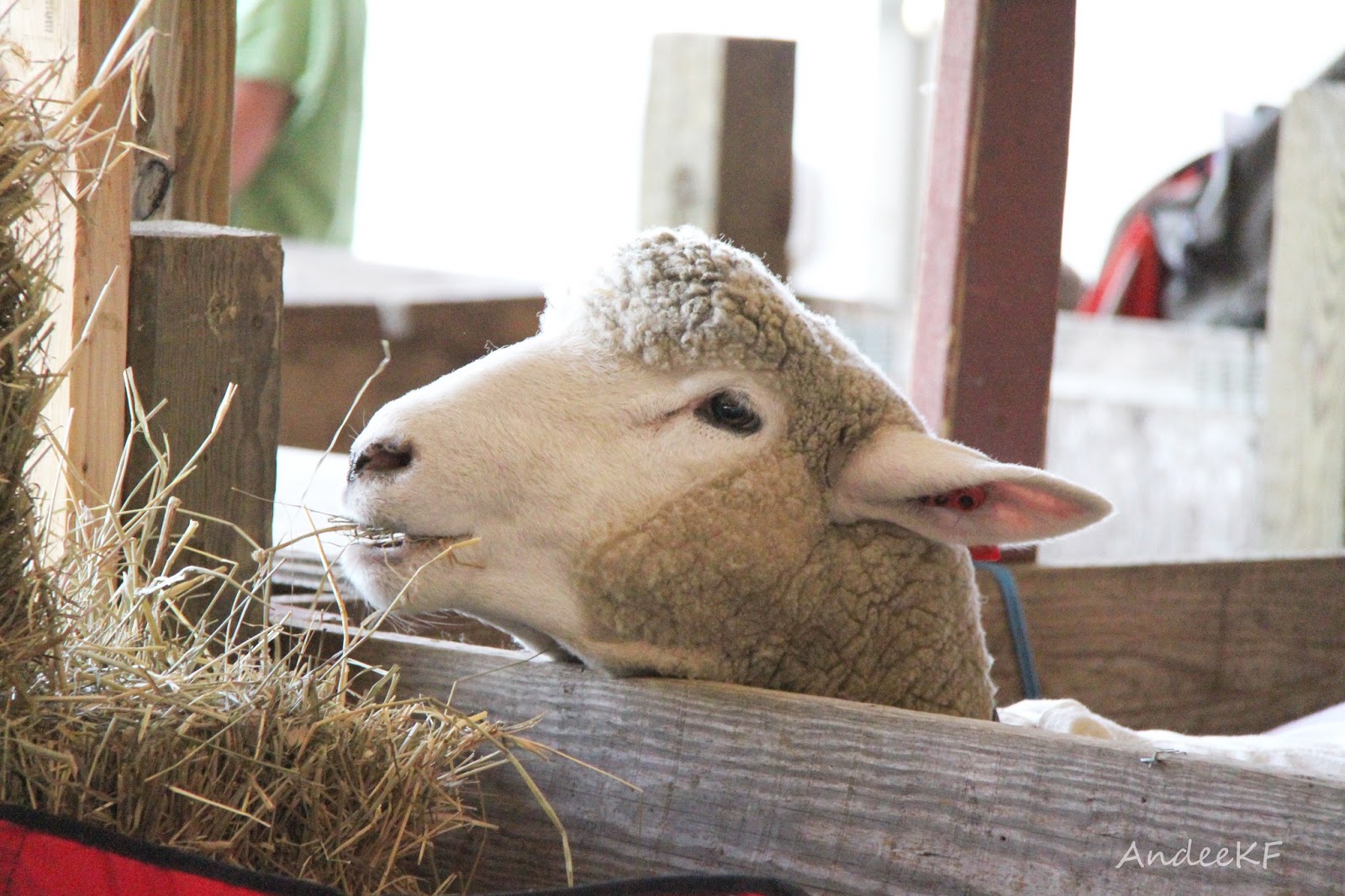
And for no reason here are some sheep pictures to keep you entertained while I vent.
She laughed at me and told me women don't knit anymore they work.
So you can't make a living having a yarn store. I told her that I was so happy we have four in the area now, plus my parents farm. Because when I started knitting there were several yarn shops where I could get natural fibers, but as they closed I was forced to buy from the big stores which had terrible selections. So I had to travel to get good yarn.
The woman was very surprised to hear that there were some yarn stores in the area. I also told her they were usually very busy when I go to them.
Again she laughed at me and told me I have no clue what I'm talking about. She said women don't want to knit they have other interests and those stores won't have any success.
Apparently she doesn't know Ravelry has over 3 million users and getting more and more everyday.
She doesn't know how much interest people have in home grown fibers and even all the men knitting these days.
When I was taking pictures of the sheep above a woman asked me if she could take a picture of me taking pictures of the sheep. I told her sure. After she took the pictures she went on to tell me that her friends are photographers for National Geographic and her one friend has gotten the cover 15 times. She wanted to take a picture of me taking pictures to show her friends what they were missing at the festival! She said they travel the world getting pictures but they really should be in Maryland seeing this! I totally agreed with her.
So I don't know maybe I'm crazy thinking knitting and the demand for yarn and fiber has increased again and you can make a living having a yarn shop. Maybe it is so popular that farmers can't get their fiber processed fast enough at the fiber mills to get on the racks of their farm stores only to be sold out as soon as it goes up for sale (which is how it goes at my parents farm).
I know at my parents farm that there is a huge demand for hand knits and even more demand for hand knits that come from alpacas on the farm. I can't knit fast enough to meet all the demand.
No I don't make a living selling my handspun yarn and hand knits.
But I know if I loose my job that I wouldn't suffer for long. It would mean I have more time to give lessons and I wish I had enough time to give lessons to everyone that asked for them. Right now I can't because I need to spend more time with my boys.
So what do you think? Even if you aren't a knitter, crocheter, spinner? Does it interest you?
Do you like to support small farms?
I know all the people at the Maryland Sheep & Wool Festival are with me.
I mean this many people sitting around to see two sheep getting sheared.
Okay I feel better and here is a little think from Wikipedia to back me up.
Hopefully knitting and the demand for yarn won't because a memory. Hopefully it is here to stay!!!!
1980s: A Decline [edit]
The popularity of knitting showed a sharp decline during this period in the Western world. Sales of patterns and yarns slumped, as the craft was increasingly seen as old-fashioned and children were rarely taught to knit in school.
The increased availability and low cost of machine knitted items meant that consumers could have a sweater at the same cost of purchasing the wool and pattern themselves, or often for far less.
Early 21st Century Revival [edit]
The 21st century has seen a resurgence of knitting. This resurgence can be noted in part to coincide with the growth of the internet and internet-based technologies, as well as the general "Handmade Revolution".
Natural fibers from animals, such as
alpaca,
angora, and
merino, and plant fibers, chiefly
cotton, have become easier and less costly to collect and process, and therefore more widely available. Exotic fibers, such as
silk,
bamboo,
yak, and
qiviut, are growing in popularity as well. The yarn industry has started to make
novelty yarns which produce stunning results without years of knitting experience
[citation needed]. Designers have begun to create patterns which work up quickly on large needles, a phenomenon known as instant-gratification knitting.
Celebrities including
Julia Roberts,
Winona Ryder,
Dakota Fanning, and
Cameron Diaz have been seen knitting and have helped to popularize the revival of the craft. The new millennium has also seen a return by men to the art of knitting.
As time and technology change, so does the art of knitting. The Internet allows knitters to connect, share interests and learn from each other, whether across the street or across the globe. Among the first Internet knitting phenomena was the popular KnitList with thousands of members. In 1998, the first online knitting magazine,
KnitNet, began publishing. (It suspended publication with its 54th edition in 2009.) Blogging later added fuel to the development of an international knitting community.
Patterns from both print and online sources have inspired groups (known as knit-a-long's, or KAL's) centered on knitting a specific pattern. Knitting
podcasts have also emerged, with much cross-pollination of ideas from blogs, 'zines, and knitting books. Traditional designs and techniques that had been preserved by a relatively small number of hand-knitters are now finding a wider audience as well.
In addition, a type of
graffiti called
yarn bombing, has spread worldwide.
On January 14, 2006 influential author and knit-blogger
Stephanie Pearl-McPhee, otherwise known as
Yarn Harlot, challenged the knitting world to participate in the 2006 Knitting Olympics.
[15] To participate, a knitter committed to casting-on a challenging project during the opening ceremonies of the
2006 Winter Olympics in
Torino, and to have that project finished by the time the
Olympic flame was extinguished sixteen days later. By the first day of the Olympics, almost 4,000 knitters had risen to the challenge.
As another sign of the popularity of knitting in the early 21st century, a large international online community and social networking site for knitters and crocheters,
Ravelry, was founded by Casey and Jessica Forbes in May 2007.
[16] At first available by invitation only the site connects knitting and crochet enthusiasts around the world and, as of May 2013, had over 3.15 million registered users.
[17]